
Product
Foodstuff Packaging Sheet
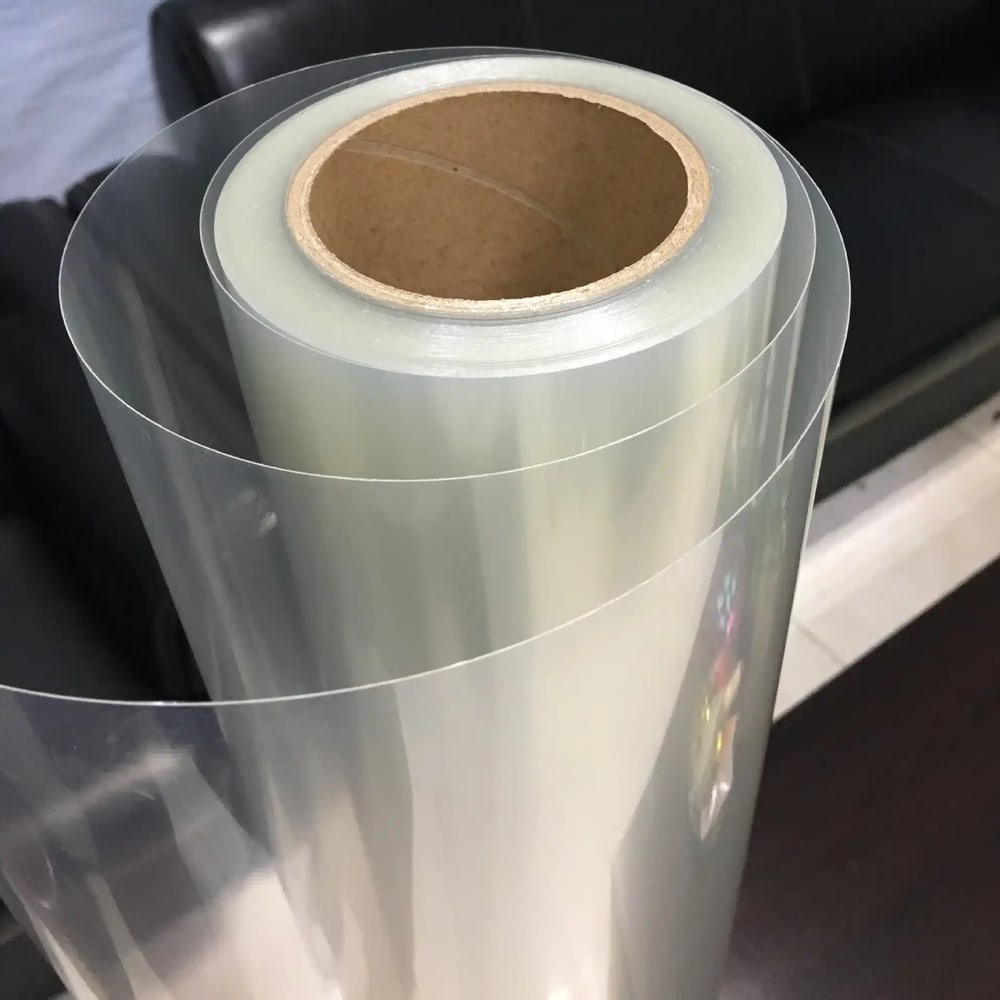
Rigid PVC sheet made to a non-toxic food-contact formula, 0.08–1 mm thick and up to 2500 mm wide. The compound conforms to Chinese CNS and Japanese PL food sanitation specifications, so it is bought for fruit trays, folding boxes and general food packing — where the sheet is in contact with the product, not just around it.
Specification
Values below are for the standard grade. Confirm thickness, width and forming against your own process before ordering; a datasheet is issued for the exact gauge quoted.
| Material | 100% virgin PVC compound |
| Type | Rigid, unplasticised |
| Food contact | Conforms to Chinese CNS and Japanese PL food sanitation specifications |
| Colour | Transparent clear |
| Thickness | 0.08 – 1 mm80 – 1,000 micron |
| Width per roll | 300 – 2500 mm |
| Weight per roll | 50 – 500 kg |
| Surface | Glossy on both faces |
| Options | Anti-static, UV-resistant and high-impact compounds |
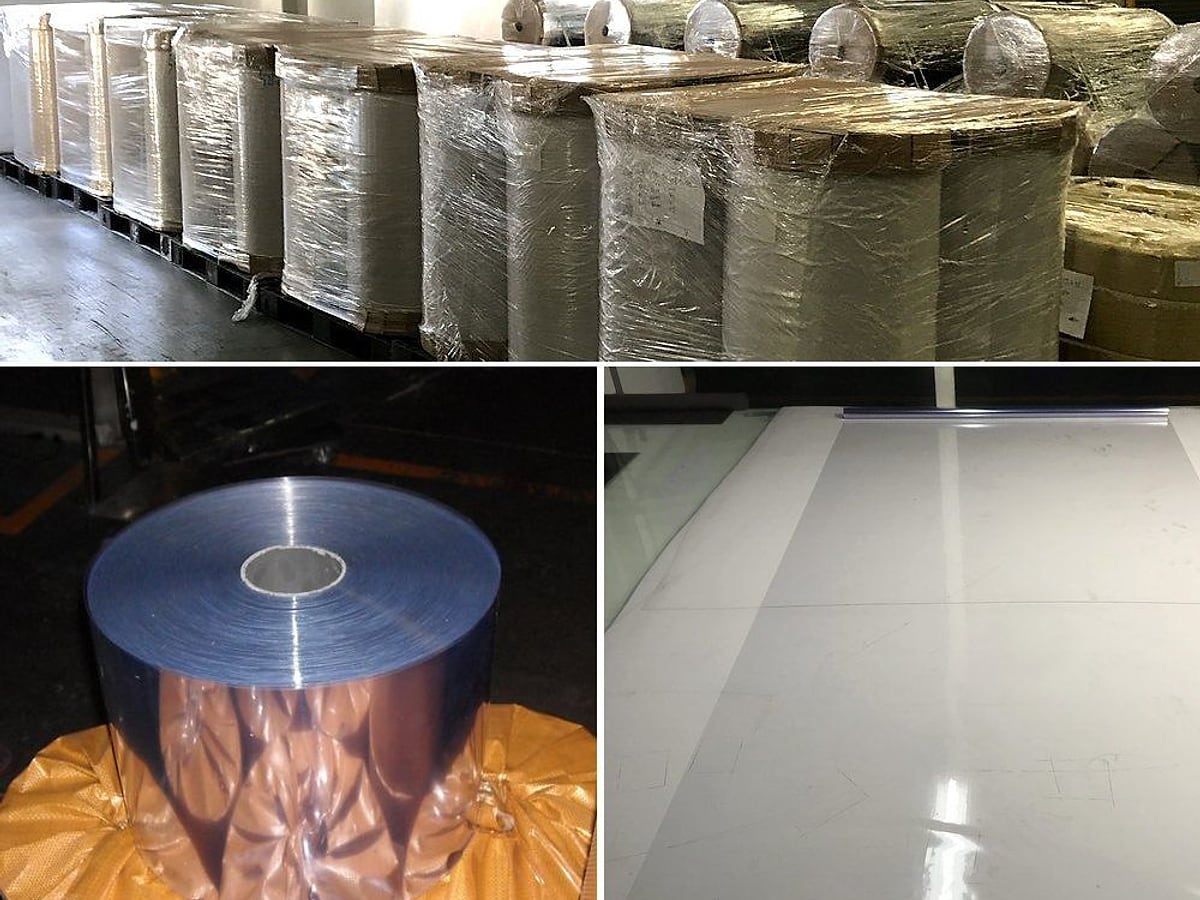
| Packaging | Rolls wrapped in plastic film or cut sheets |
| Production capacity | 1,000 tons per month |
| Delivery | 2 weeks and up after deposit |
| Payment | TT, L/C, Western Union, MoneyGram |
| MOQ / trial order | 1,000 kg / 300 kg |
Food contact is a formulation question, not a clarity question
Two sheets can look identical on the table and behave completely differently against food. What separates them is the compound: which stabiliser, which lubricant, which impact modifier, and how much of those can migrate to the surface over the life of the pack. A food-contact grade is formulated so that migration stays inside the limits the standard sets.
The sheet we supply for this use is made to a non-toxic formula that conforms to Chinese CNS and Japanese PL food sanitation specifications. That is a statement about the compound and the paperwork behind it — not about how clear the sheet looks, and not something a photograph can show.
What to ask for
Ask for the food-contact declaration for the exact grade and keep it with your own compliance file. If your market is the EU or the US, say so at the enquiry stage: the declaration has to be issued against the standard your customer will test you against, not just against the product.
Clarity is a separate specification
High transparency is what the fruit-tray and folding-box grades are bought for, and it comes from the same rigid, unplasticised base. It is quoted separately from food contact, because a clear sheet is not automatically a food-grade one.
Where the range goes
0.08–0.18 mm goes to fruit trays. The sheet has to form fast in a deep draw and stay clear enough that the fruit is what the buyer sees; speed and draw depth matter more here than stiffness.
0.1–0.5 mm goes to folding boxes for food — printed, creased and folded. The sheet has to crease without cracking along the fold line and hold the fold once set, and the surface has to take ink without pre-treatment.
0.12–1 mm goes to general food packing: trays, lids, inserts and formed containers. Gauge is chosen by the load the pack carries and by the depth it is drawn to, not by how the pack looks on the shelf.
The bands overlap, so tell us the part rather than the thickness — we will confirm the gauge and the food-contact grade together.
Anti-static, UV-resistant and high-impact versions
The standard food-contact compound covers most packing lines. Where the line needs something else, the same food-contact base is supplied in three variants: anti-static where the sheet runs over high-speed equipment and static lifts dust onto the surface; UV-resistant where the pack sits in daylight or under retail lighting for months; high-impact where a thinner gauge still has to survive the drop test.
Each variant is a different compound, so it is quoted as a grade rather than as an additive. Name the one your line needs and the declaration is issued for that variant, not for the base sheet.
Where it goes
Four places this grade is bought for, and what changes in each.
Fruit trays
0.08–0.18 mm clear sheet formed at speed, where draw depth and transparency decide whether the pack sells the fruit.
Folding boxes for food
0.1–0.5 mm sheet printed, creased and folded; it has to crease without cracking and take ink as supplied.
General food packing
0.12–1 mm sheet for trays, lids and inserts, with the gauge set by load and forming depth.
Thermoformed containers
Formed containers and lids where the sheet is the food-contact surface itself, not a window in a board pack.
Food-grade packaging sheet — technical questions
Is this PVC sheet food-contact approved?
The compound is made to a non-toxic formula that conforms to Chinese CNS and Japanese PL food sanitation specifications, and the food-contact declaration is issued with the order. If your market is the EU or the US, tell us at the enquiry stage so the documents are raised against the standard your customer tests against.
How is it different from your super clear rigid sheet?
Same base polymer and the same clarity band; the difference is the compound and the paperwork. Super clear is sold on optics and gauge for packaging, printing and lamination. This grade is formulated and documented for contact with food.
Which thickness should I use for fruit trays?
0.08–0.18 mm is the usual band: thin enough to form fast in a deep draw and to stay clear. If the tray carries weight or stacks high, a heavier gauge in the same food-contact compound is available up to 1 mm.
Can you supply anti-static, UV-resistant or high-impact versions?
Yes, in the same food-contact base. They are quoted as separate grades because the compound changes; the food-contact declaration is issued for the variant you order.
What is the minimum order?
1,000 kg per specification, with a 300 kg trial order for a first run. Standard packing is 50–500 kg per roll; other roll weights are available if your line takes them.
Elsewhere in the range
Most buyers order the same grade repeatedly; if you need more than one, the grades can share a container.

Ask for the Foodstuff Packaging Sheet datasheet
Tell us the thickness, width, color and monthly quantity you need. We reply with the datasheet, unit price, freight and lead time — usually within 24 hours.
- Datasheet and test report for the exact grade
- Free A4 sample of standard grades
- Colour and grain matched to your physical sample