
Product
Vacuum Mold Sheet
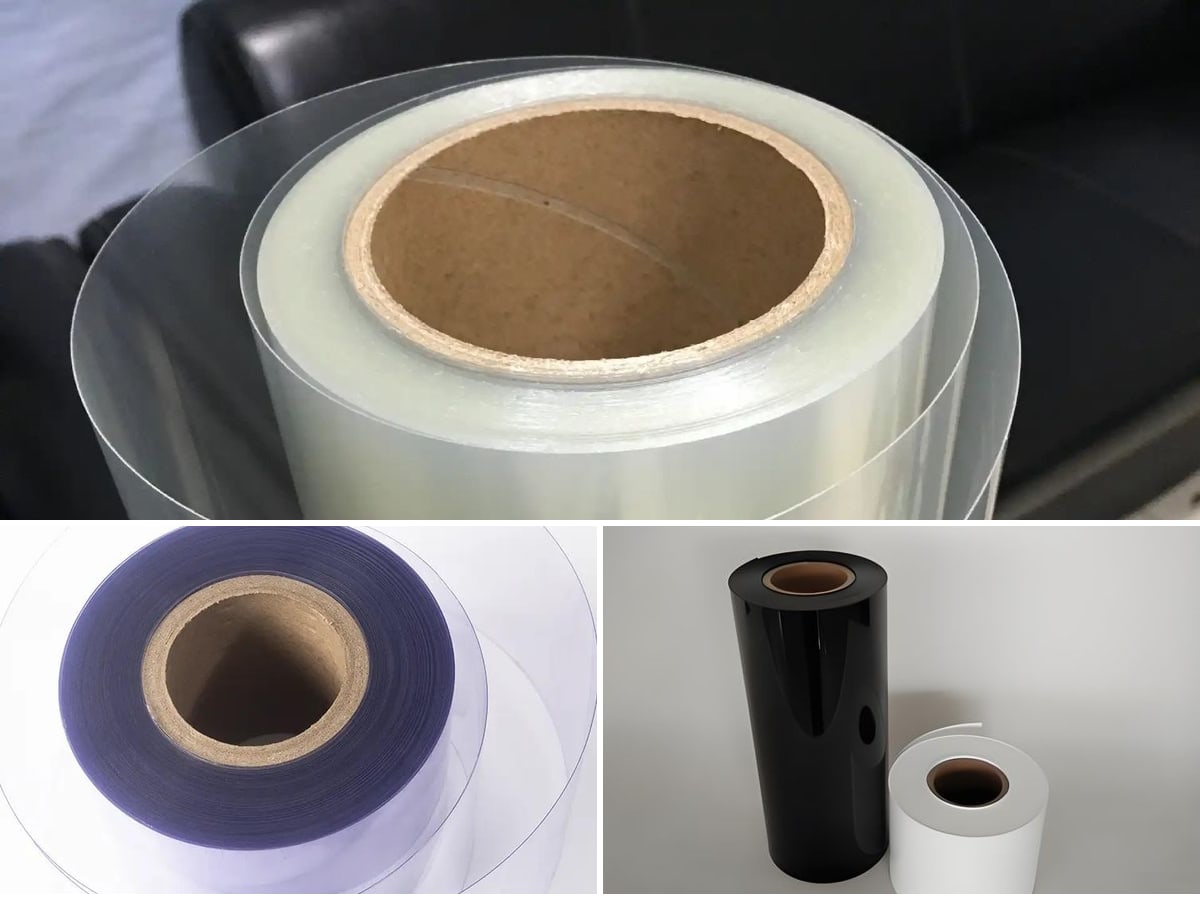
Rigid PVC sheet for vacuum forming lines: 0.045–2 mm thick, 200–2000 mm wide and 50–500 kg per roll. Supplied clear, white or matched colour, with heat shrinkage set to the forming cycle on your machine rather than left at a fixed figure, so a tray formed this month comes out the same as one formed six months ago.
Specification
Values below are for the standard grade. Confirm thickness, width and forming against your own process before ordering; a datasheet is issued for the exact gauge quoted.
| Material | Rigid PVC compound for vacuum forming |
| Type | Rigid, unplasticised |
| Thickness | 0.045 – 2 mm45 – 2,000 micron |
| Width per roll | 200 – 2000 mm |
| Weight per roll | 50 – 500 kg |
| Surface | Glossy clear, matte, embossed or coloured |
| Colour | Clear, white, black and matched colours |
| Options | Antistatic, UV-stabilised, corona treated, flame retardant |
| Standards | REACH, RoHS and EN 71 |
| Inspection | ASTM D-1593, ASTM D-792 and JIS-K6734 |
| Packaging | Rolls wrapped in foam or cut sheets |
| Production capacity | 1,000 tons per month |
| Delivery | 2 weeks and up after deposit |
| Payment | TT, L/C, Western Union, MoneyGram |
| MOQ | 1,000 kg / 300 kg |
What a forming line asks of the sheet
A vacuum forming line fails on three things: wall thickness, webbing between cavities, and shrinkage after the part cools. The sheet is specified against those three, not against a headline gauge.
Wall thickness. In a female mould the sheet thins where it stretches, and the deepest point of the cavity ends up thinnest. A sheet with a tight gauge tolerance and an even heat profile draws more material down before it fails, so the wall at the bottom of a deep pocket stays useful rather than turning into a membrane. That is why the sheet is sold to a gauge tolerance and inspected to ASTM D-1593 rather than by nominal thickness alone.
Webbing. Two cavities close together draw from the bridge between them. If the sheet is cooler at the edges than in the middle, the bridge freezes first and the parts arrive joined by a web that has to be cut out by hand. Even heating across the width, and a shrinkage figure that matches your oven, is what keeps the bridge clean.
Shrinkage. Every PVC sheet shrinks when it is heated and relaxes when it cools, and the amount depends on how the sheet was made, not just on the compound. Tooling is cut once and used for years, so the sheet has to arrive at a consistent figure. We set the heat shrinkage to the cycle you run — oven temperature, dwell time, and whether the part is formed against a hot or cold mould — and hold that figure from order to order.
0.045 mm to 2 mm, and where each gauge lands
0.045 to 0.1 mm is the blister end: shallow trays, inserts, lids and folding packs, where the formed part is a few millimetres deep and speed matters more than depth. Walls come out thin and clear, and the product inside stays visible.
0.15 to 0.3 mm is the working band for packaging: multi-cavity trays, display inserts, trays for tools and hardware, and the folded and formed parts in a stationery or gift pack. Deep enough to hold a part, thin enough to cool quickly on a fast cycle.
0.4 to 0.6 mm is chosen where the formed part has to carry a load or survive handling after it comes off the machine — a display stand, a machine cover, a liner over a panel.
0.8 to 2 mm is the heavy end: large formed panels, luggage shells, car interior parts and covers that are formed hot and keep their shape without a frame. Draw depth falls as the gauge rises, so this end is chosen for stiffness rather than for a deep pocket.
Clear, colour and grain
The clear grade is the default for anything where the customer has to see what is inside: blister packs, trays, lids and display inserts. It has to stay clear through the oven as well as in the roll, because a sheet that hazes on the forming line has wasted the run.
White, black and matched colours are made to sample. Colour is used as a code as often as decoration — a green tray for one product line, a black insert for a premium pack — and matching to a physical sample is the only reliable way, since a screen image will not reproduce the resin colour.
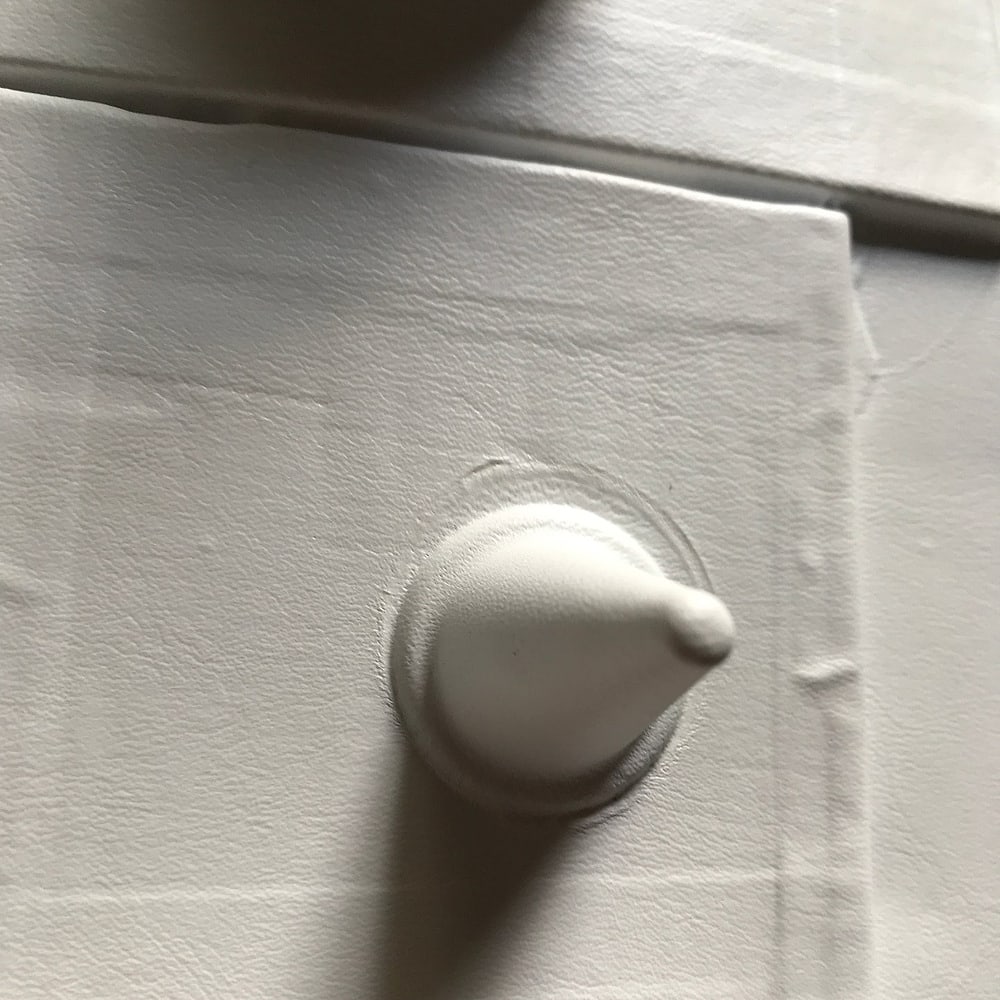
Embossed faces are for parts that are handled. A fine grain, a matte or a leather pattern hides scuffs and fingerprints that a gloss face shows, and takes the reflection off a display part standing under a lamp. The formed area keeps the grain through the draw, which is why a grained sheet is specified before the tooling is cut: a deep draw stretches the pattern, and a coarse grain will show that stretch.
Corona treatment is available where the formed part is printed or laminated afterwards, and an antistatic grade where the sheet runs on a fast line and static is lifting the sheet off the rail or attracting dust into a clean pack.
What a quotation needs
Send the part drawing or a sample of the part you already form, the gauge, the width your machine runs, and the draw depth. If the part is formed on an existing tool, tell us the mould temperature and the dwell time — that is what the shrinkage figure is set against.
Where the sheet has to be clear, tell us how clear: a formed tray for a blister pack and a viewing window are judged by different standards. Where it has to be printed or laminated, tell us the process, because the corona treatment is chosen against it.
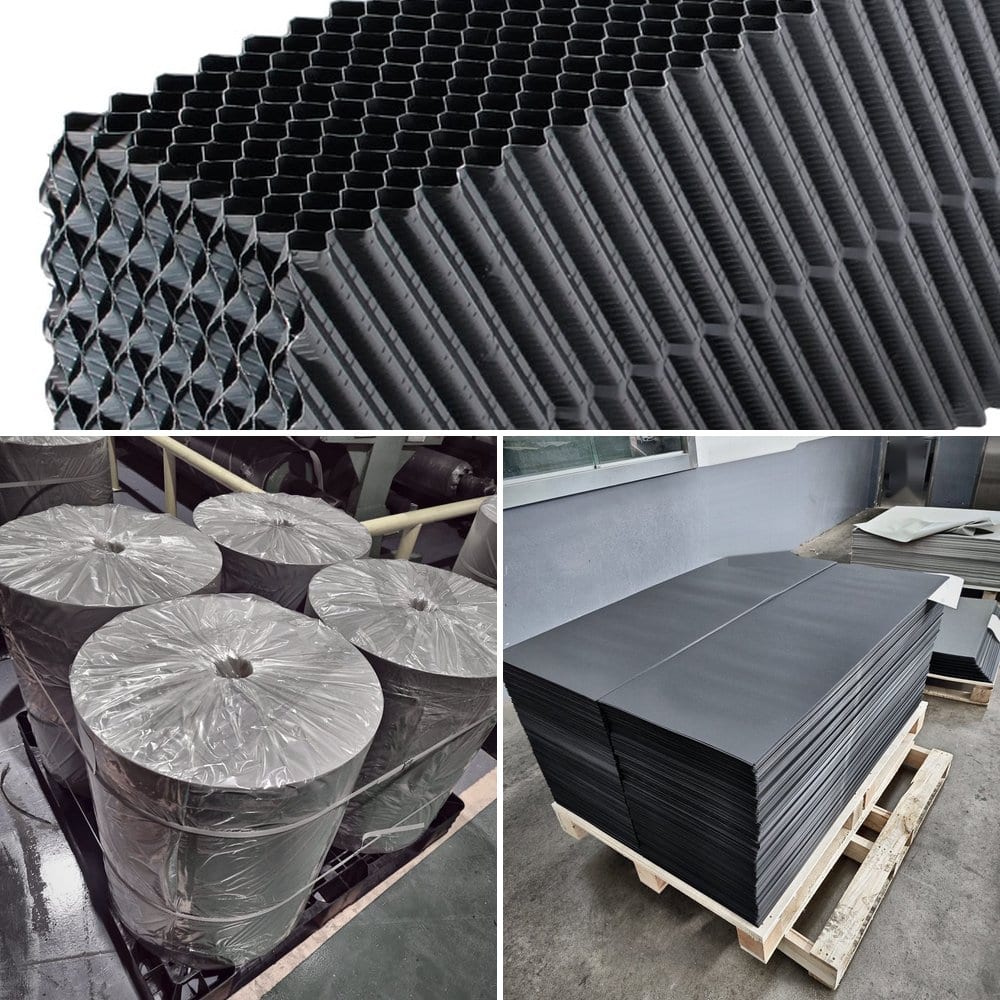
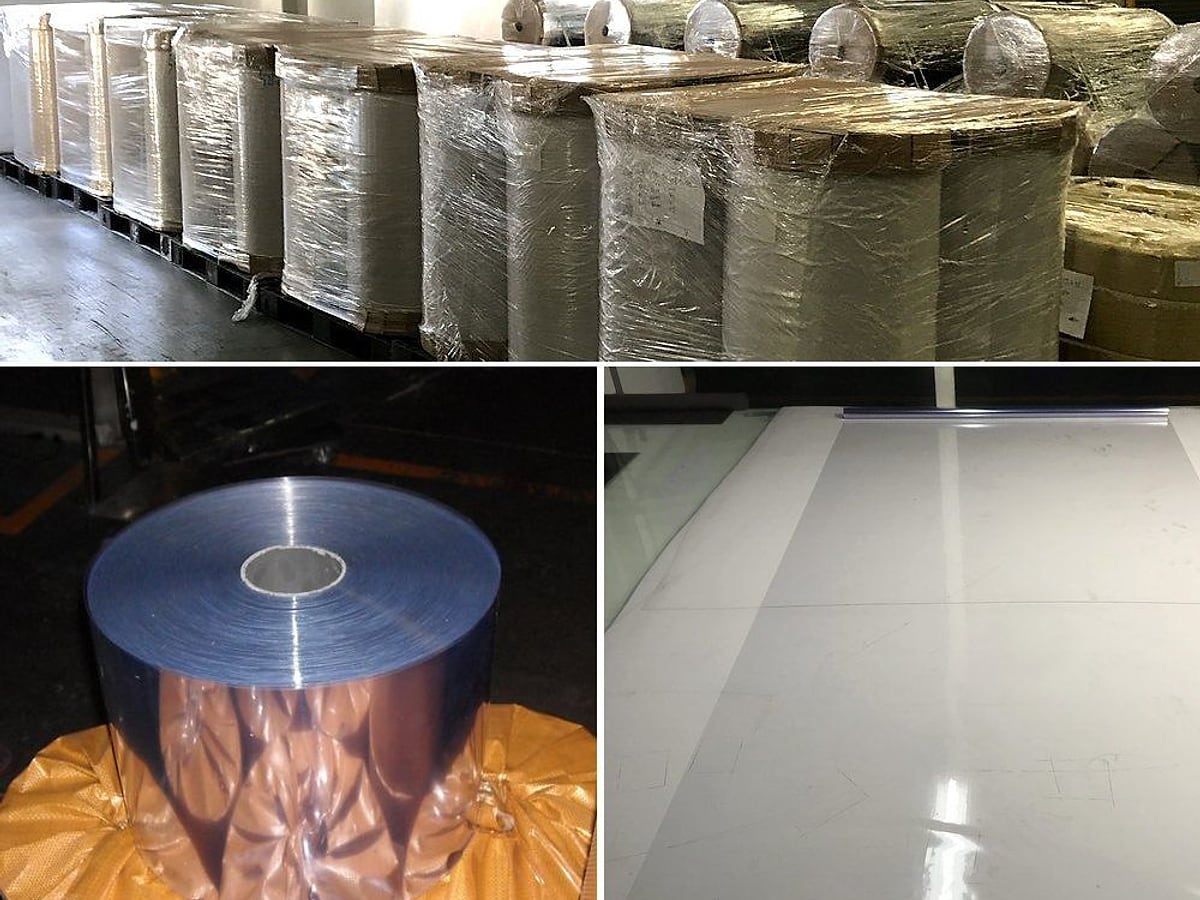
Rolls are 50–500 kg on a paper core, wrapped in foam; cut sheets on pallets are available where the machine takes flat stock. A 300 kg trial run is normal before a first bulk order, and a formed sample from your own tool is the fastest way to settle a gauge.
Where it goes
Four places this grade is bought for, and what changes in each.
Blister trays and packaging inserts
Clear 0.045–0.2 mm sheet formed into trays, inserts and lids for tools, hardware, cosmetics and gift packs, where the product has to be seen and held in place.
Display and point-of-sale parts
Formed stands, sign holders and display inserts in 0.3–0.6 mm, stiff enough to stand on a counter and clear enough to let the printed card behind it read through.
Formed panels and linings
Heavier 0.6–2 mm sheet vacuum formed into door and ceiling panels, kitchen cabinet parts, luggage shells and car interior trim, where the part carries its own shape.
Stationery, toys and seasonal goods
Formed and folded packs for stationery sets, toy blister cards and seasonal decorations, in colour-matched sheet that takes print and holds a fold without cracking.
Vacuum mold sheet — technical questions
Is this PVC vacuum mold sheet rigid or flexible?
Rigid.
Which thickness should I choose for vacuum forming?
0.045–0.1 mm for shallow blister trays and inserts, 0.15–0.3 mm for multi-cavity packaging trays and display inserts, 0.4–0.6 mm where the part is handled or has to stand up, and 0.8–2 mm for large formed panels that carry their own shape. Send the draw depth and the part drawing and we will confirm the gauge.
Can you set the heat shrinkage for my machine?
Yes. Tell us the oven temperature, the dwell time and whether you form against a hot or a cold mould, then pvc rigid sheet for vacuum mold is made to match. A fixed figure is used only where the customer has no preference for vinyl sheet, and it is quoted on the datasheet so a later order can be checked against it.
Can pvc vacuum forming sheet be antistatic, UV-stabilised or flame retardant?
Yes. Antistatic, UV-stabilised, corona-treated and flame-retardant grades are made to order, along with cold-resistant, weather-resistant and anti-fog variants. The clear grade can be made in the same options, though a heavy additive load will take some clarity out of it.
What is the minimum order of pvc vacuum mold film?
1,000 kg per specification, with a 300 kg trial order for a first run. Packing is 50–500 kg per roll in foam wrap, or cut sheets on pallets. Delivery is 2 weeks and up after deposit.
Elsewhere in the range
Most buyers order the same grade repeatedly; if you need more than one, the grades can share a container.

Ask for the Vacuum Mold Sheet datasheet
Tell us the thickness, width, color and monthly quantity you need. We reply with the datasheet, unit price, freight and lead time — usually within 24 hours.
- Datasheet and test report for the exact grade
- Free A4 sample of standard grades
- Colour and grain matched to your physical sample