
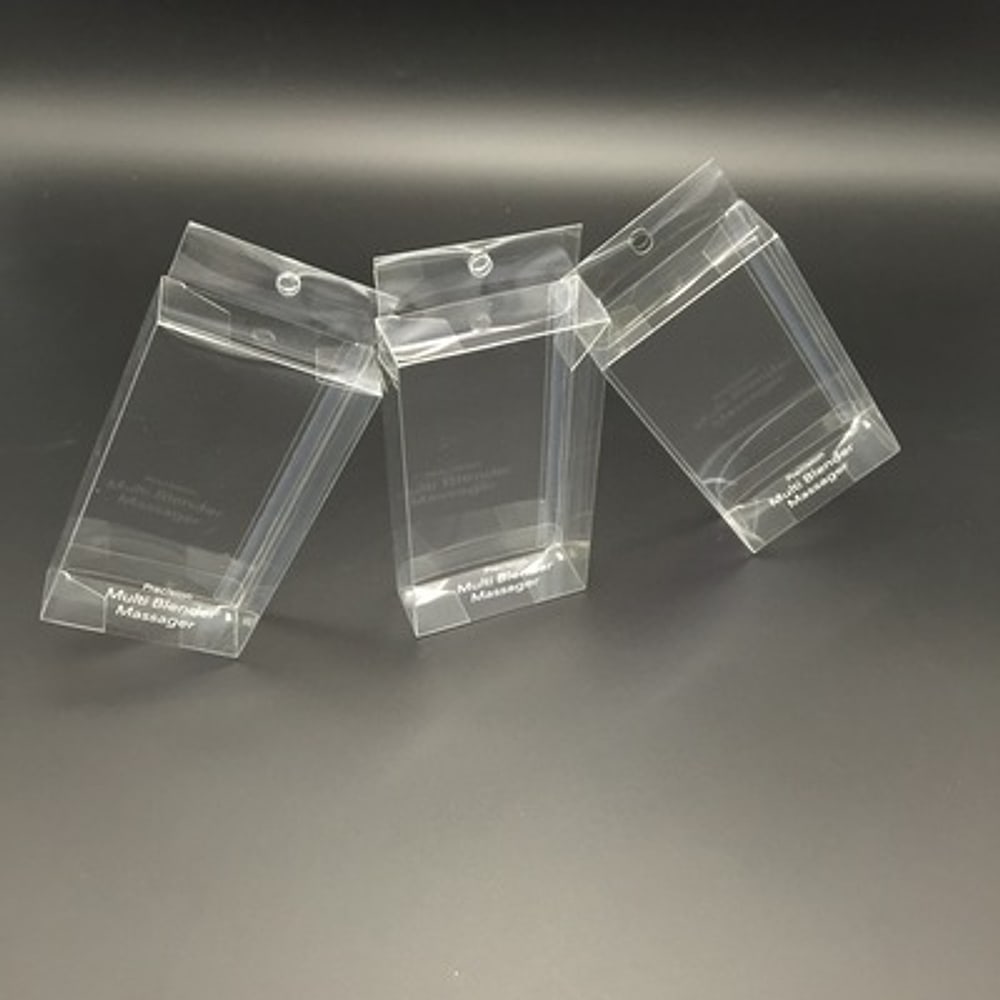
Product
Fold Mold Sheet
Rigid PVC sheet for folding boxes: 0.035–2 mm thick, 200–1500 mm wide and 50–500 kg per roll. The compound is made for the crease rather than for the flat — it folds on a scored line without whitening or splitting, and takes solvent, hot-melt and high-frequency welding, so a box can be formed and closed on the same line.
Specification
Values below are for the standard grade. Confirm thickness, width and forming against your own process before ordering; a datasheet is issued for the exact gauge quoted.
| Material | Rigid PVC compound for folding boxes |
| Type | Rigid, unplasticised |
| Thickness | 0.035 – 2 mm35 – 2,000 micron |
| Width per roll | 200 – 1500 mm |
| Weight per roll | 50 – 500 kg |
| Surface | Glossy clear, light water-ripple grain, matte or embossed |
| Colour | Clear, tinted or opaque to sample |
| Crease | Folds without whitening, holds a score |
| Options | UV-stabilised, high impact, corona treated, antistatic, cold resistant |
| Standards | REACH, RoHS and EN 71 |
| Inspection | ASTM D-1593, ASTM D-792 and JIS-K6734 |
| Packaging | Rolls wrapped in foam or cut sheets |
| Production capacity | 1,000 tons per month |
| Delivery | 2 weeks and up after deposit |
| Payment | TT, L/C, Western Union, MoneyGram |
| MOQ | 1,000 kg / 300 kg |
The crease decides the sheet
A folding box is bought on the fold line, not on the flat. A white crease, a split corner, or a lid that springs open after closing are all decided in the two millimetres either side of one score.
Whitening is a material question before it is a machine question. Our fold grade is made from high-quality PVC raw material — 100% virgin compound, no filler and no regrind — with the stabiliser and lubricant balance set so the sheet yields at the crease instead of turning opaque, and it is relaxed at the end of our line so it reaches your creaser without stress already built in. That is why a clear box made from this sheet carries no white line down the corner. A radius that is far too tight for the gauge is the one place whitening can still start, so tell us the fold radius where the crease is set hard.
Splitting is the score, not the sheet. A score that is too deep leaves too thin a web under the groove and the web gives way after a few openings; a groove that is too tight for the gauge cracks the outside of the bend. Both are set against the thickness you run, so a score cut for the gauge does not split — send us the gauge and the groove geometry and it is quoted for that sheet. Where a pack ships or stores unheated, a cold-resistant compound is available for the coldest leg of the journey.
Spring-back is the score. A score that is too shallow leaves a hinge that pushes the lid back open; too deep and the thin web under the groove gives way after a few openings. On a 0.3–0.5 mm sheet the web is normally left at 0.2–0.3 mm, and the groove angle is matched to how far the panel travels — a 90° wall and a 180° lock need different geometry. Send the blank layout with the fold angles marked and the gauge is quoted against that, not against a general purpose sheet.
0.035 mm to 2 mm, and what each gauge folds into
0.035 to 0.15 mm is the light end: sleeves, hanger tabs, printed overlays and hanging packs where the sheet carries print and a hanging hole rather than a load. It folds on a fine score and stays flat between the folds, which keeps a printed panel from waving.
0.2 to 0.4 mm is the working band for tuck-top cartons, cosmetic sleeves, garment boxes and confectionery cartons — stiff enough to hold a crease and stand on a shelf, thin enough to run on an ordinary creaser without cracking the web.
0.5 to 1 mm is chosen where the fold carries load: rigid boxes with a separate lid, drawer boxes, display bases and reusable packs. The groove has to be wider and the corner radius bigger, and the box is normally welded or riveted at the seam rather than tucked.
1 to 2 mm is where the pack stops being a carton and becomes a case: handles, tool boxes, structural folds and shell parts. These are folded hot or on a rotary creaser with a heated rule, because the sheet has to be warm to take a bend at this gauge; at the top of the range the joint is welded rather than tucked and the corner is a radius rather than a crease.
Clear, water ripple and colour
Clear with gloss on both sides is the standard face, with a light water-ripple grain as the usual grain and other grains made to order. The ripple breaks up a reflection without blurring what is behind it, and it hides the fine scuffs a box picks up in a carton, which is why a clear fold pack usually reads cleaner than a sheet with a mirror finish.
Printing is done on a corona-treated face. Tell us which face takes ink and which face is welded or glued, because the treatment is applied to one side only — a corona face does not weld cleanly, and a box welded on the printed side will fail at the seam rather than at the fold.
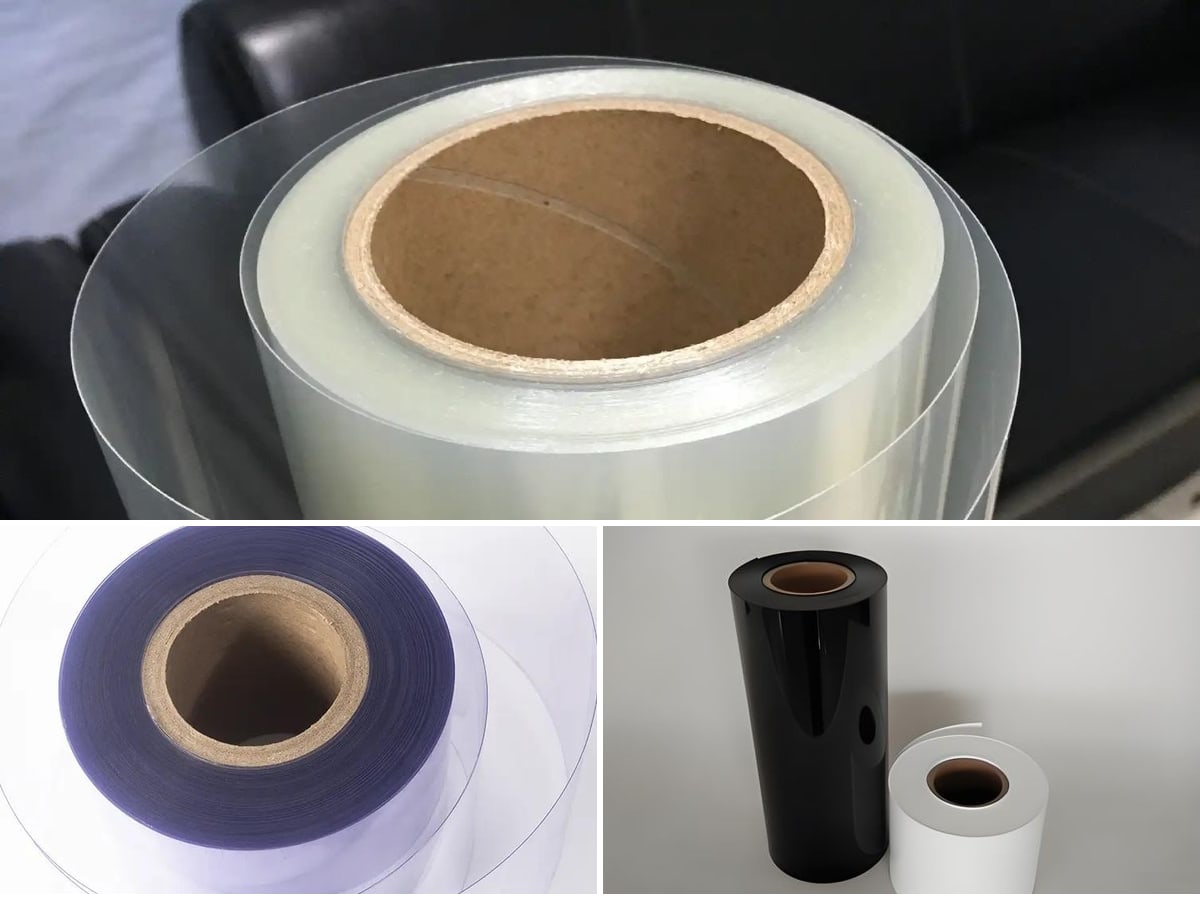
Colour is matched to a physical sample: clear, smoke, tints, opaque white or blue, and black. A tint is often used as a code as much as decoration — a blue sleeve for one range, a black base for a premium line — and a screen image will not reproduce the resin colour, so send a physical sample and the production run is matched to that sample.
Matte and embossed faces are for packs that are handled before they are sold. A matte face takes a fingerprint without showing it, and an embossed grain holds up where a gloss panel would show every touch by the time the box reaches the shelf.
What a quotation needs
Send the blank drawing — the flat layout with every score line and the fold angle at each one — plus the gauge you run now and the width your creaser takes. One 90° fold and two 180° locks on the same 0.5 mm sheet are different specifications, and quoting from a finished box photo will usually land on the wrong one.
Tell us how the box closes: solvent cement, hot-melt, high-frequency welding or a tuck flap. Each wants a different surface, and the sides that are welded should be left untreated.
Tell us the temperature as well: the folding shop, the warehouse and the coldest leg of the journey. That single answer decides whether the standard or the cold-resistant compound is quoted, and it is cheaper to settle before the tooling is cut than after the first winter shipment.
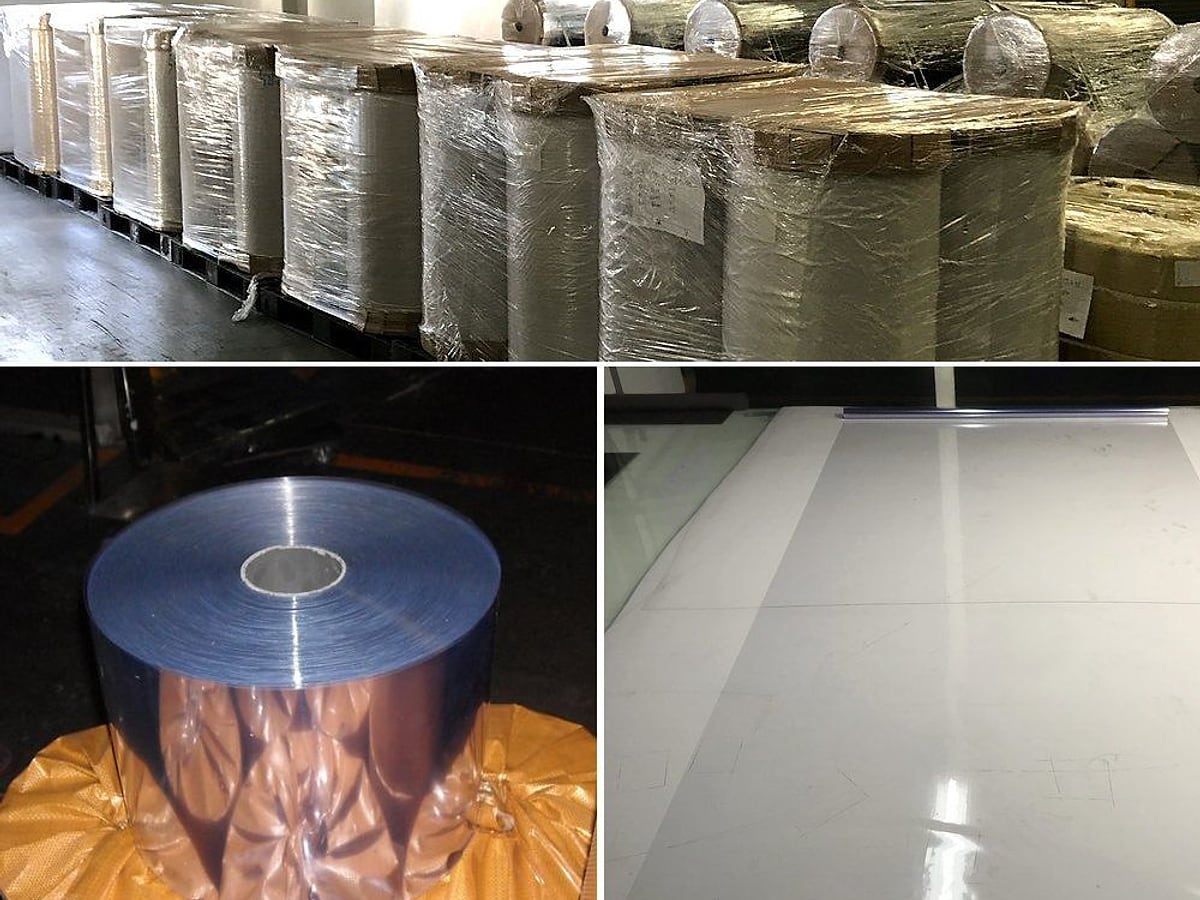
Rolls are 50–500 kg on a paper core, wrapped in foam; cut sheets on pallets are available where the creaser takes flat stock. A 300 kg trial run is normal before a first bulk order, and a folded sample from your own blank is the fastest way to settle a gauge.
Where it goes
Four places this grade is bought for, and what changes in each.
Toy and gift boxes
Clear or tinted 0.2–0.4 mm sheet folded into tuck-top cartons, sleeves and pillow packs, where the product has to be seen through the front panel and the box still has to stand square on a shelf.
Cosmetic and personal-care cartons
Printed sleeves, drawer boxes and display cartons in 0.3–0.5 mm, folded on a corona face so the print keys, with the inside face left clean for welding.
Garment and textile packs
Shirt and kidswear boxes, hanger sleeves and shirt-front inserts in 0.15–0.4 mm, where the pack has to fold flat for storage and open without a white line across the print.
Confectionery and food cartons
Window cartons and folded trays in 0.2–0.4 mm, in a compound that meets REACH and RoHS, where the fold has to stay clean right next to the print.
Fold mold sheet — technical questions
Is fold mold sheet rigid or flexible?
Rigid. It is unplasticised PVC sheet that folds on a scored line; it does not drape or stretch the way a soft PVC sheet does.
Will it whiten or split along the fold?
Not on a score set for the gauge. We achieve no whitening at the PVC fold line by using high-quality PVC raw materials.
Which thickness should I use for a folding box?
0.035–0.15 mm for sleeves, hanger tabs and printed overlays, 0.2–0.4 mm for tuck-top cartons, cosmetic sleeves and garment boxes, 0.5–1 mm for rigid boxes, drawer boxes and display bases, and 1–2 mm for cases and structural folds.
Can fold mold sheet be printed, glued and welded?
Yes. The print face is corona treated, and the reverse can be left untreated for solvent cement, hot-melt or high-frequency welding. Say which face takes ink and which face is joined, because a corona face does not weld cleanly and a box welded on the treated side fails at the seam.
Does it come in colours and grains?
Clear is standard, with other grain. Tinted, smoke, opaque white or blue, and black we also could make. Matte or embossed faces are available for packs that are handled before sale. If you can provide physical samples, we will match the colour of your sample in production.
What is the minimum order of fold mold sheet?
1,000 kg per specification, with a 300 kg trial order for a first run. Packing is 50–500 kg per roll with foam wrap, or cut sheets on pallets. Delivery is 2 weeks and up after deposit.
Elsewhere in the range
Most buyers order the same grade repeatedly; if you need more than one, the grades can share a container.

Ask for the Fold Mold Sheet datasheet
Tell us the thickness, width, color and monthly quantity you need. We reply with the datasheet, unit price, freight and lead time — usually within 24 hours.
- Datasheet and test report for the exact grade
- Free A4 sample of standard grades
- Colour and grain matched to your physical sample